How a turntable works
- Turntable
- Phono stage
- Amplifier
- Speakers
The turntable spins the record at a steady 33⅓ or 45 rpm while the stylus, a tiny diamond tip, traces the wavy groove cut into it. The cartridge that holds the stylus turns that motion into a very small electrical signal, a few thousandths of a volt. A heavy platter, driven by a rubber belt from a separate motor, keeps the speed even so the pitch holds steady.
That signal is far too small for an amplifier’s normal inputs, so it goes through a phono stage first, which boosts it and puts back the bass that was turned down when the record was cut. Many integrated amplifiers have one built in, on the input marked Phono; if yours doesn’t, a separate phono stage sits between the turntable and the amp. A moving-coil cartridge gives an even smaller signal than a moving-magnet one, so it needs a phono stage with more gain.
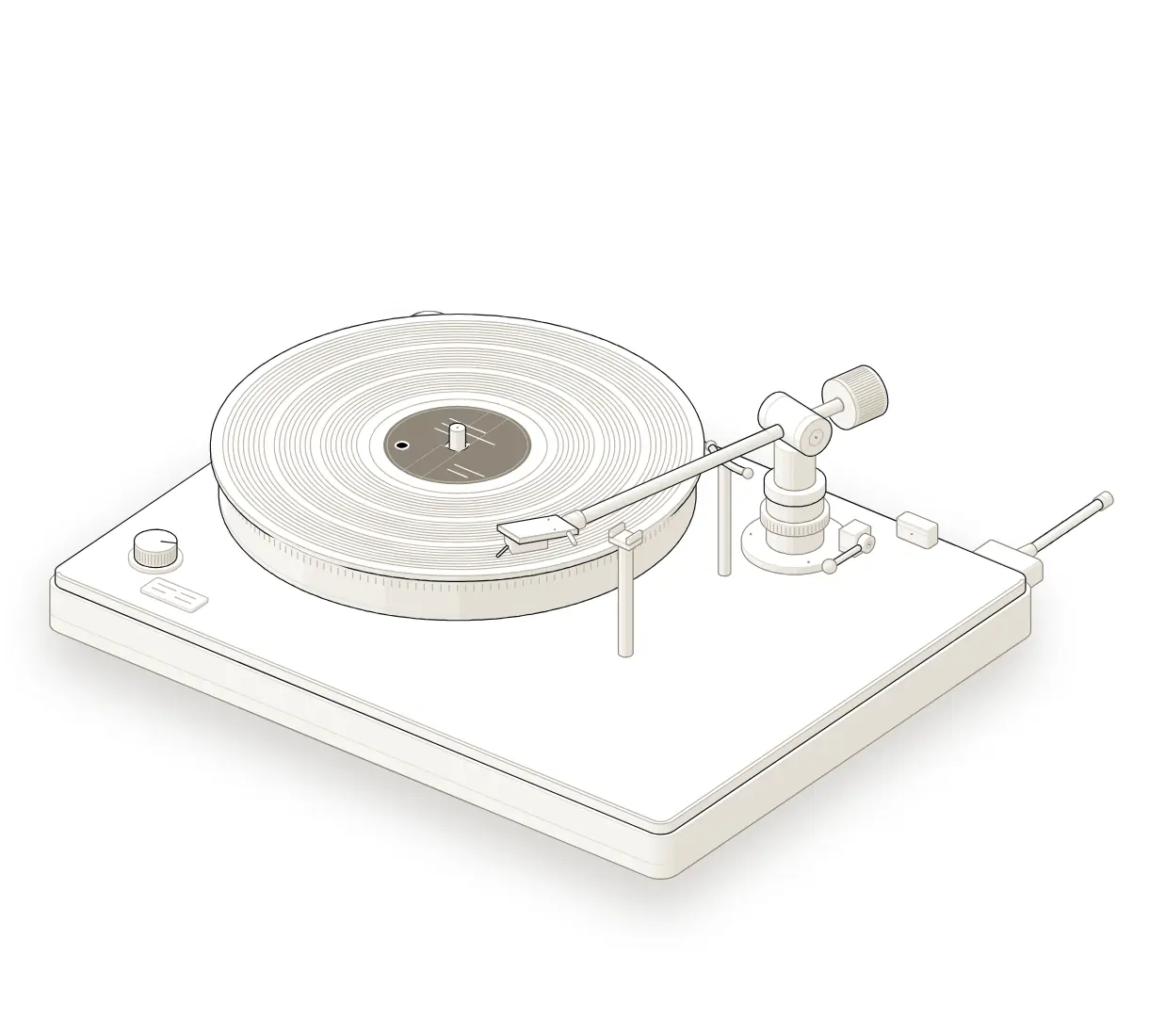
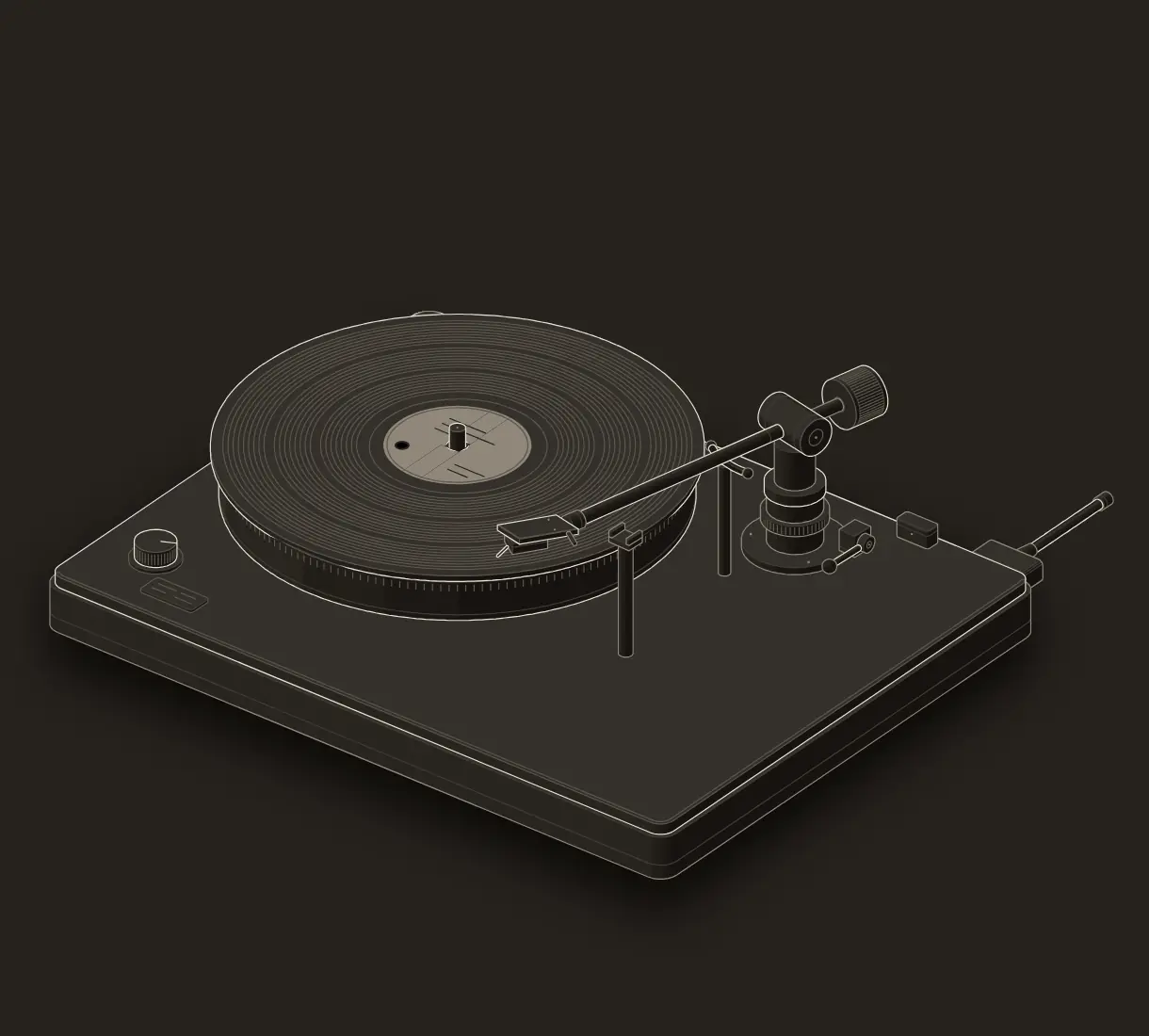
assembled